How to Sketch a House From a Photo: Find the Big Shapes First
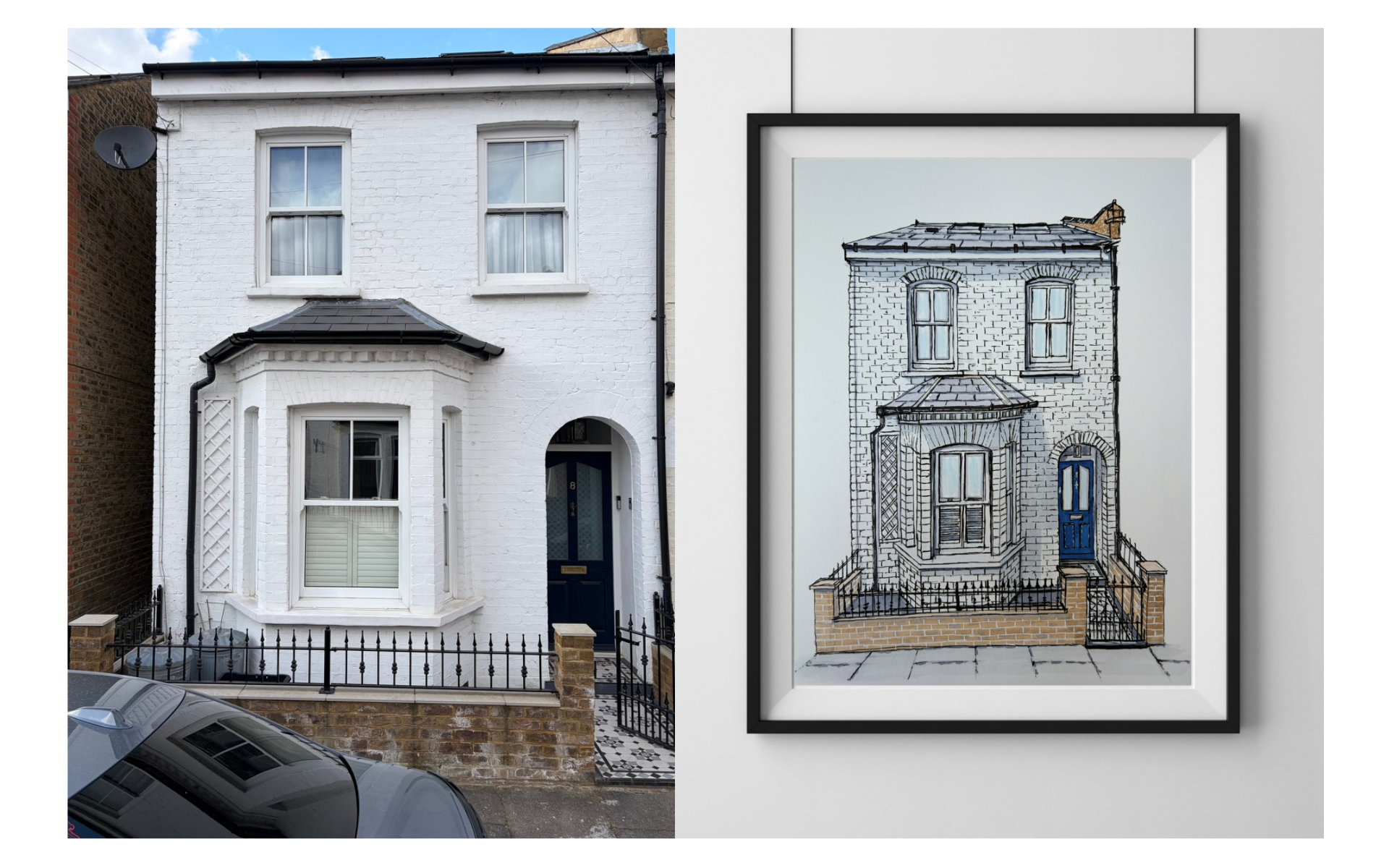
Begin with the part nobody notices
A photograph of a house can feel full of information: roof tiles, window frames, brickwork, plants, shadows and the small features that make it recognisable. That is exactly why many people begin by drawing a window and soon feel lost. I have found that the quieter first step is the one that makes everything else easier: find the biggest shapes.
Before I think about character or detail, I look for the outline of the building, the roof shape, the main rectangle of the front wall and the spaces around it. If those shapes sit well on the page, the drawing already has a chance of feeling like the house. Detail can then support the structure instead of trying to rescue it.
Make a simple shape map
Put the photo beside your paper and lightly mark the overall height and width of the building. Then divide that space into a few large relationships: where the roof begins, how wide the door area is, and where the main windows sit. You are not making a finished drawing yet; you are making a map.
It helps to compare rather than measure every millimetre. Is the roof about a third of the full height? Does the bay window take up more space than the doorway? Where does the chimney sit in relation to the roof edge? These questions train the eye to see proportion. Keep your first lines pale enough that you can adjust them without feeling you have ruined anything.
Use perspective as a guide, not a test
Most photographs of houses include a slight angle, so verticals and roof lines may not behave as you expect. Rather than trying to make every line perfectly technical, look for families of lines. The top and bottom of a window usually tilt in the same direction; the near edge of a roof often looks longer than the far edge. Notice the pattern and carry it gently through the drawing.
A common mistake is drawing every window as an isolated rectangle. Once the main wall shape is established, place windows as grouped landmarks. Check their height against one another, then their spacing. This keeps the front of the house coherent and leaves room for the small quirks that make it feel lived in.
Add the details that carry personality
Only when the big shapes and windows feel settled do I begin to enjoy the details. A distinctive front door colour, a climbing plant, a curved porch, a familiar tree or the pattern of light across a bay window can say more than a labour-intensive attempt to draw every brick. Choose a few features that someone who knows the house would recognise.
For texture, suggest rather than catalogue. A few broken pencil marks can imply brickwork; a variation in tone can suggest the depth under an eave. Let some areas stay quiet. The eye needs a resting place, and the contrast between simple passages and careful details makes the drawing more convincing.
Give yourself permission to make a study
You do not have to turn the first attempt into a finished portrait. A small study is a useful way to understand the building before committing to a larger drawing. Try one version with just line, then a second with a few areas of tone. You will learn which shapes matter and which details can be left out.
Want some guidance?
If you would like a little guidance with drawing from photographs, I offer relaxed private art lessons that meet you where you are.
Lessons are tailored to your interests and experience, whether you want to build confidence, improve your observational skills or work towards a particular subject or project.
One-to-one and paired lessons are available in Teddington and the surrounding areas.