How to Use Negative Space to Improve Your Drawings
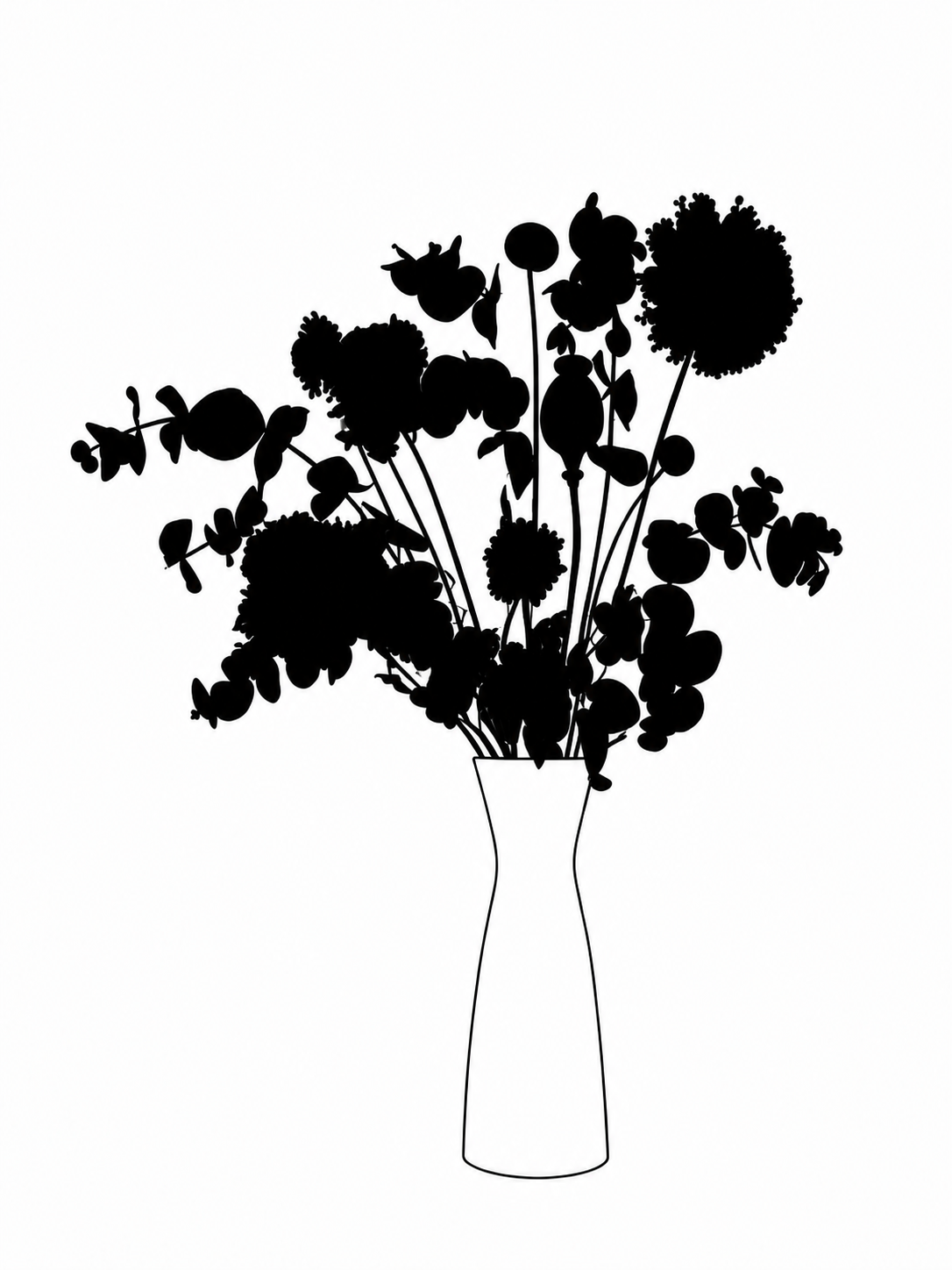
The spaces are part of the picture
When a drawing is not quite working, our instinct is usually to look harder at the object. We study the mug, the chair, the face or the plant and try to understand it better. Sometimes the more useful thing is to look away from the object and notice the shapes around it. Those empty-looking areas are called negative space, and they can be a remarkably calm way to improve proportion.
Negative space is not really empty. It is the triangle beneath a chair seat, the narrow gap between a handle and a cup, or the irregular shape between leaves. When you draw those spaces, you give your eye a different problem to solve: a shape rather than a familiar object.
Why familiar objects can mislead us
Our brains are efficient. They recognise a chair quickly and then offer us a simplified idea of what a chair should look like. That is helpful in daily life, but it can be awkward when drawing. We may make the legs too even, the back too straight or the seat too wide because we are drawing our idea of the chair rather than the particular chair in front of us.
The negative spaces do not have a name, so they are harder to stereotype. They ask you to compare angles, widths and distances. That small change can make a drawing feel more observed and less guessed.
A simple exercise to try
Choose an object with interesting gaps: a houseplant, a bicycle, a pair of scissors or a chair. Do not begin by outlining the object. Instead, pick one space beside, beneath or inside it and lightly draw its outline. Then compare the next space to the first. Is it taller, narrower, more tilted?
Keep the page simple. You are not trying to make a finished drawing on the first attempt. The value is in slowing down and noticing. If a line feels wrong, look at the space it creates rather than assuming the object is the issue.
Use it alongside big shapes
Negative space works especially well after you have established the big shapes. Start by placing the overall height and width of the subject, then use the surrounding spaces to check the position of the smaller parts. In a portrait, the space between the head and shoulder can help; in a building drawing, the sky around a roofline can be a useful guide.
It is not a trick that replaces drawing skills. It is a way of practising the skill that matters most: seeing relationships accurately. Over time, you may find yourself noticing these spaces without deliberately looking for them.
A quieter way to build confidence
I like exercises that give a beginner something specific to do without demanding a perfect result. Negative space does exactly that. It makes observation feel more like a series of small, manageable decisions. Try a ten-minute study, then compare it with the object rather than judging it against an imagined standard.
Ready to take the next step?
If you would like calm, individual guidance with drawing, I offer private art lessons in Teddington and the surrounding area, as well as online. We can work from the subjects and materials that genuinely interest you.