How to Start a Watercolour Painting Without Overworking It
Begin with a small, forgiving subject
Watercolour can look effortless when somebody else is using it. A few loose washes, a small mark and suddenly there is light, atmosphere and shape. When you begin, it can feel much less simple. The colour spreads farther than expected, the paper buckles a little and the instinct is to keep correcting. That is often the point at which a fresh painting becomes overworked.
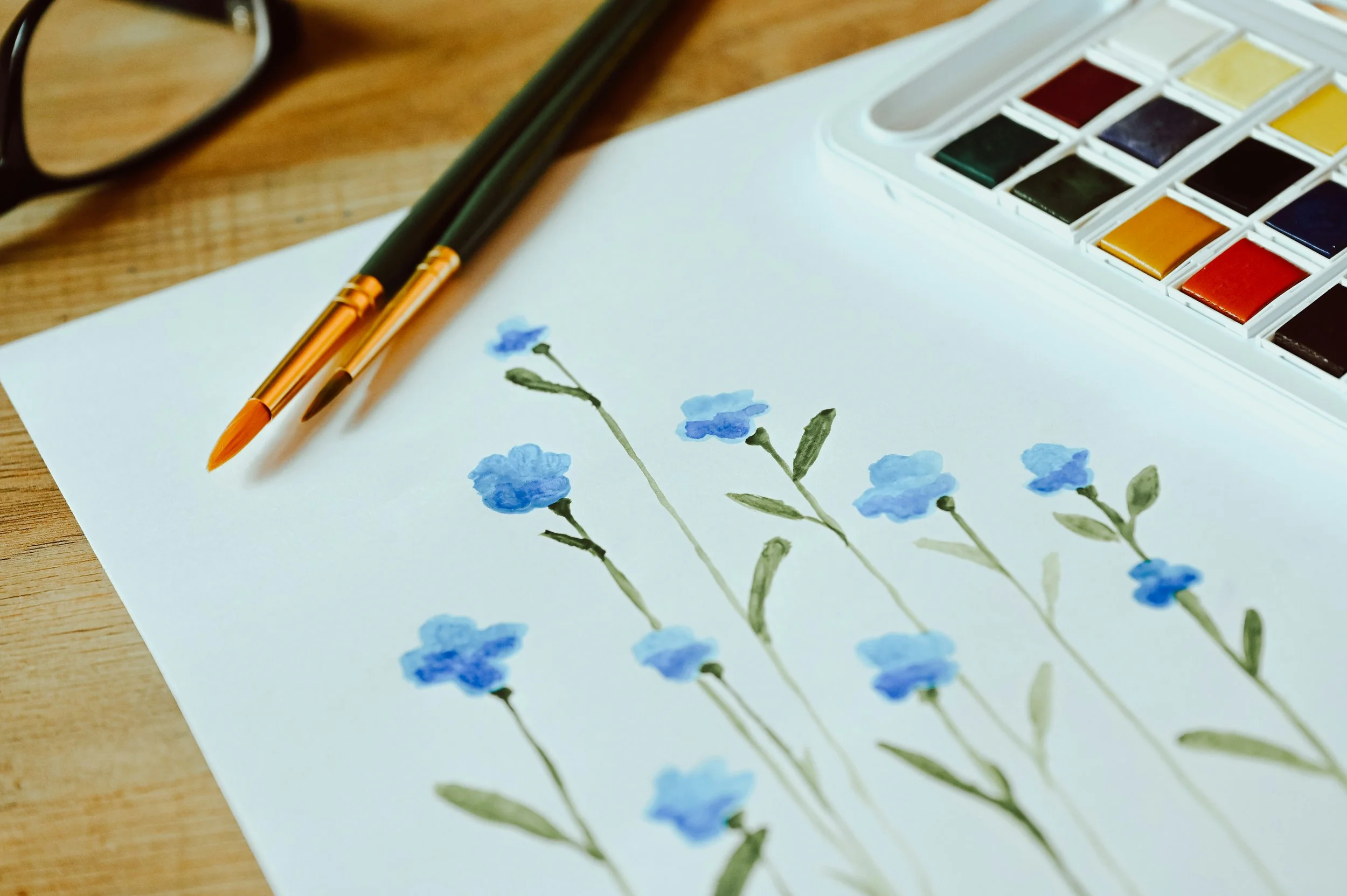
I find it helps to choose a small, straightforward subject for the first attempt: a leaf, a cup, a flower head or a simple view through a window. The aim is not a finished masterpiece. It is to understand what the water is doing.
Decide where the light will stay
Before any paint goes on the paper, spend a moment looking for the lightest areas. In watercolour, the white of the paper often provides the brightest highlight, so it is easier to protect it than to try to paint it back later. Lightly mark the outer shape if that gives you confidence, but keep the drawing simple.
Ask yourself where the eye should go first. It might be the pale edge of a petal, the shine on a mug or a small opening in a sky. Leaving a few areas untouched gives the painting room to breathe.
Mix enough colour before you begin
A common beginner frustration is mixing a colour, making one brushstroke and then having to stop to make more while the first wash is drying. Try mixing a little more than you think you will need. Test it on a spare piece of the same paper, because colour often looks different once it has dried.
You do not need a large palette. Two or three colours, plus water, are enough for a useful study. Keeping the colour choices limited can make the result feel more unified and makes it easier to notice how warm and cool tones work together.
Let the first wash do its job
For the opening wash, use a reasonably full brush and place the colour with a relaxed hand. Try not to chase every edge immediately. Watercolour needs a little time and space to settle on the paper. If you continue to brush the same damp area, the surface can become dull or patchy.
Watch the shine. While a wash is glossy, it is still moving. When it starts to lose that shine, it is changing stage. Learning to notice this is more valuable than trying to make every mark perfectly controlled from the beginning.
Work in layers, not corrections
Once the first wash is dry, you can decide what it actually needs. Perhaps there is a shadow to deepen, a stem to suggest or one darker shape to bring the subject forward. Add a second layer only where it will make a difference.
This is where restraint becomes useful. Instead of asking, “What else can I add?”, ask, “What is the one thing this painting needs next?” A simple painting with one or two well-placed darker marks usually feels clearer than one where every area has been worked equally hard.
Use edges deliberately
Not every edge needs the same level of attention. A crisp edge can make a focal point feel clear, while a softer edge can suggest distance, light or a rounded form. Try allowing one side of a leaf or flower to soften into the paper rather than outlining everything.
That variation is part of what makes watercolour feel alive. It is also a good reminder that a painting is not a colouring-in exercise. You are choosing what to say clearly and what to leave for the viewer to complete.
Know when to stop
Stopping can be the hardest part. A useful habit is to put the brush down, step back and look at the painting from a short distance. If the overall light, shape and feeling are there, it may already be enough. Taking a quick photograph can help too; seeing the work smaller often reveals whether another mark is needed.
If a study does become muddy or heavy, keep it. Write a short note about what happened and begin another. Those small pages are where confidence grows, because they teach you how your materials behave.
Prepare the paper and brush
Use watercolour paper rather than ordinary printer paper if you can. It does not need to be expensive for a practice study, but it should be sturdy enough to hold a wash without immediately disintegrating. Have two jars of water if possible: one for rinsing and one for clean water. Keep a piece of kitchen paper nearby to lift excess moisture from the brush.
These small preparations reduce the need to react in the middle of a wash. They also make it easier to notice the difference between paint that is too dry, paint that is too wet and paint that is flowing in a way you can work with.
A calm way to build confidence
Try painting the same simple subject three times. In the first version, focus only on the pale wash. In the second, add one darker layer. In the third, experiment with one soft edge and one crisp edge. You will learn far more from this than from trying to solve everything in a single piece.
Ready to take the next step?
If you would like relaxed guidance with watercolour, drawing or coloured pencil, I offer private art lessons for adults in Teddington and South West London, as well as online. We can work at your pace and build a process that makes painting feel enjoyable rather than intimidating.