Why I Use Coloured Pencils and Drafting Film for Pet Portraits
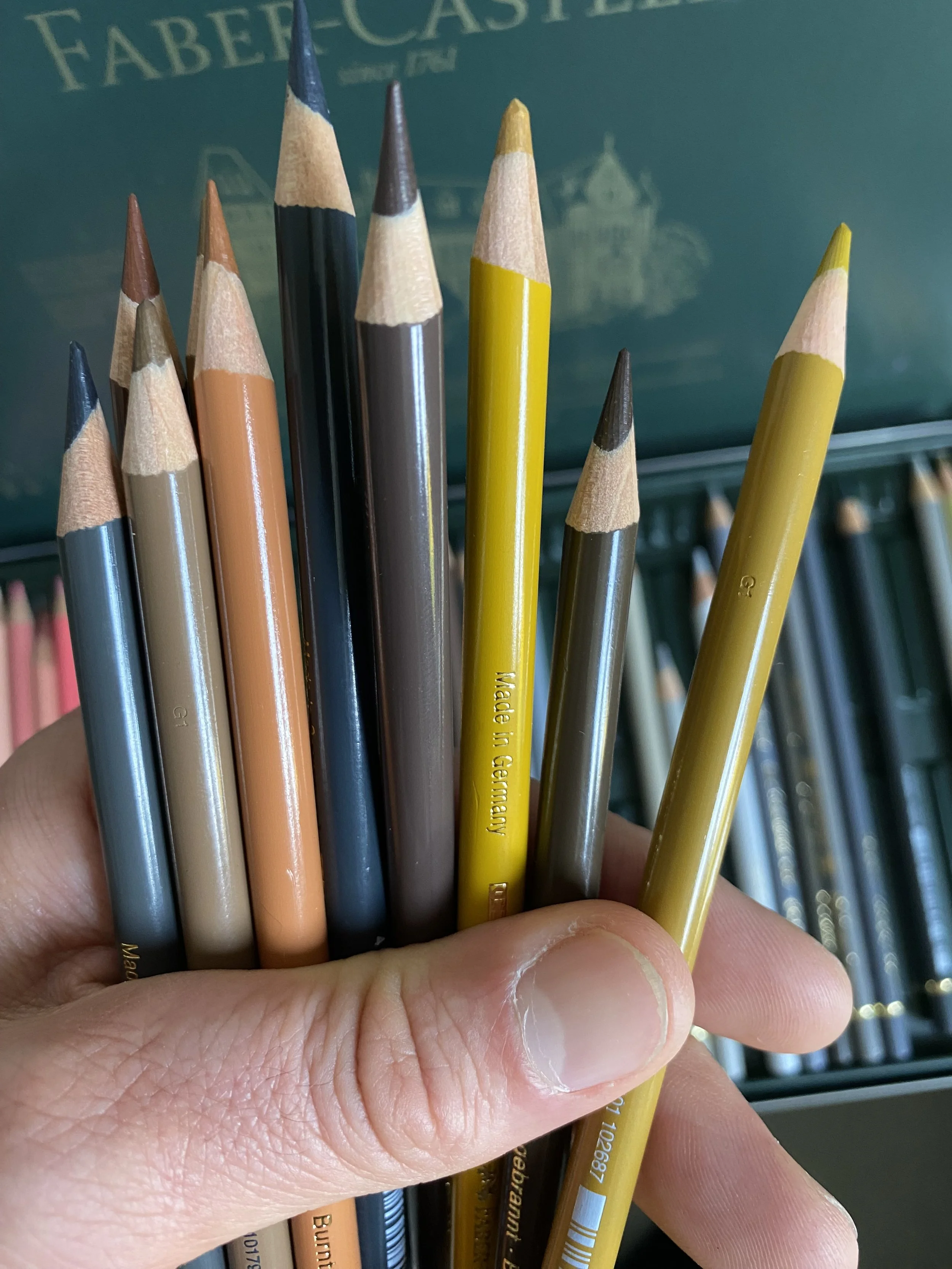
Coloured pencils used to draw pet portraits - Mark Mannering Barton
People often assume highly detailed pet portraits are created with paint or digitally.
In reality, most of my portraits are created using coloured pencils on drafting film, a combination that allows for an incredible amount of control, layering and detail.
It’s also a process that takes time, patience, and a slightly different approach to drawing.
Why coloured pencils work so well for pet portraits
Coloured pencils allow you to build colour gradually rather than applying it all at once.
That’s particularly important when drawing animals, where subtle shifts in tone and texture make a huge difference.
Fur, eyes, noses and reflections all rely on layering.
Instead of creating a single flat colour, coloured pencil lets you slowly develop:
depth
softness
texture
contrast
fine detail
That gradual build-up is what helps create a more realistic and natural feel.
What is drafting film?
Drafting film is a semi-transparent surface originally designed for technical drawing.
Unlike traditional paper, it has a very smooth surface with just enough texture to hold multiple layers of pencil.
One of the biggest advantages is that you can work in layers far more easily without the surface becoming overly saturated.
It also allows for:
sharper detail
cleaner highlights
controlled texture
subtle blending
For pet portraits especially, that level of control becomes incredibly useful.
Building fur through layers
One of the most common questions I get is:
“How do you draw fur so realistically?”
The answer is usually layers.
A single section of fur may involve:
multiple pencil colours
light initial structure
repeated directional strokes
gradual darkening and refinement
Very little is done heavily at the start.
The portrait develops slowly over time, often building dozens of subtle layers to create depth and realism.
Why the eyes matter so much
In pet portraits, the eyes are often what people connect with first.
Getting that right isn’t just about accuracy it’s about capturing expression and personality.
Coloured pencil works particularly well for this because it allows for very controlled highlights, soft transitions, and small tonal adjustments.
Tiny changes in contrast or reflection can completely alter how alive the portrait feels.
The process takes time and that’s part of the point
Detailed coloured pencil work is naturally slower than many other mediums.
But that slower process is also what allows the portrait to feel personal and carefully observed.
Every layer is built by hand.
Every detail is considered.
And that’s part of what makes original artwork feel different from something digitally generated or mass-produced.
Why I enjoy the process
One of the things I enjoy most about coloured pencil work is the balance between control and observation.
You spend a huge amount of time studying:
colour shifts
fur direction
texture
light
expression
Over time, you start noticing details most people would normally miss.
That process of slowing down and really observing is a big part of what I enjoy both in portrait commissions and in teaching drawing more generally.
Learning coloured pencil techniques
If you’re interested in learning coloured pencil techniques yourself, I also offer one-to-one art lessons tailored to your pace and interests.
That might include:
layering techniques
blending
drawing fur
understanding colour
improving realism
working with drafting film
Lessons are available both online and in person.
Commissioning a pet portrait
If you’re considering a pet portrait, or simply interested in the process behind the artwork, feel free to get in touch.
One of the things I value most is creating drawings that feel personal not just visually accurate, but recognisable in character and expression too.
Just fill the form in at the bottom of the page linked here