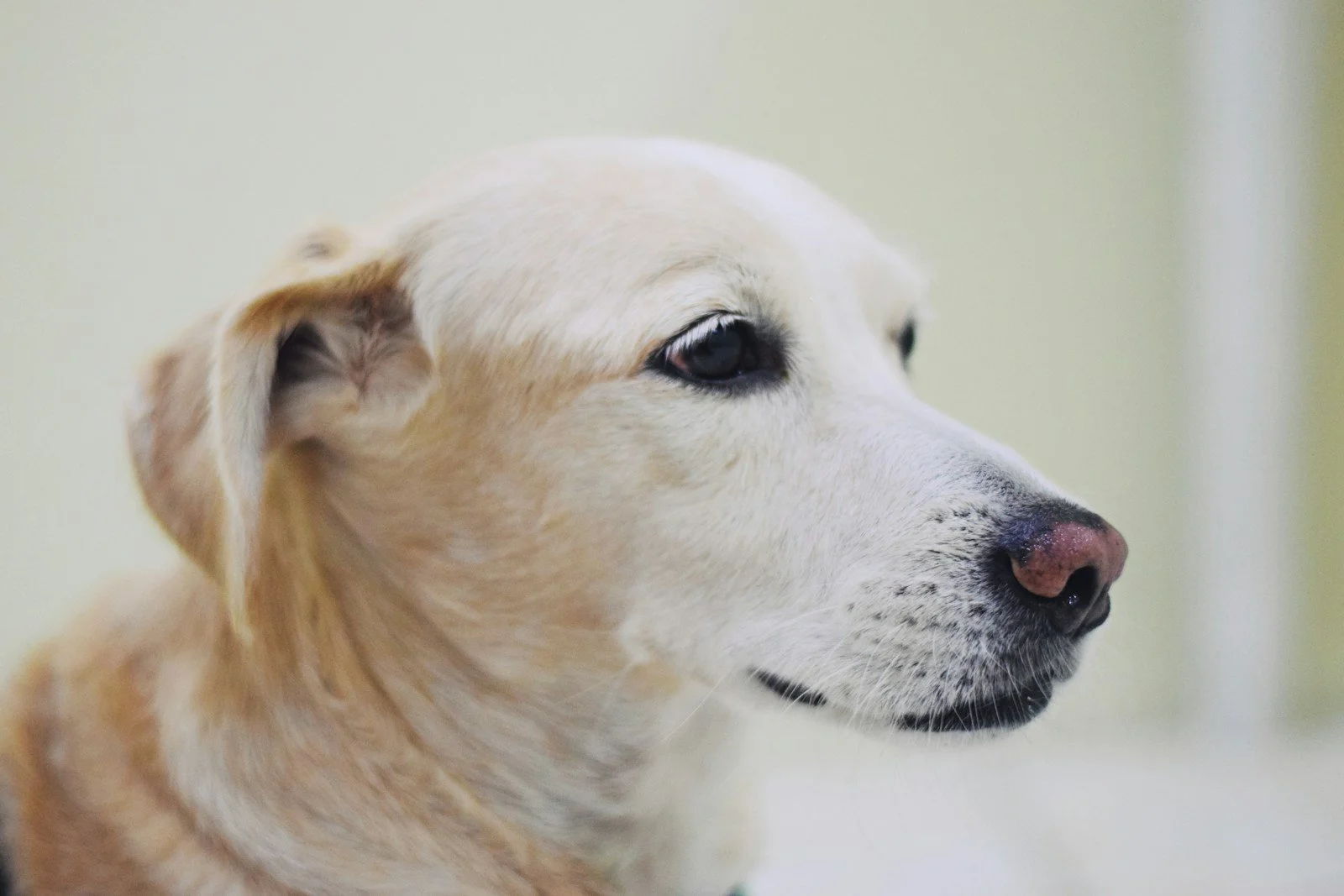
A favourite photograph and a useful drawing reference are sometimes the same image, but they do slightly different jobs. One may remind you of a lovely afternoon while leaving the face tiny in the frame. Another may be less dramatic yet show the expression and features clearly.
When I look at a reference for a pet portrait, I am looking for information and character together. I want to understand the shape of the head, the light across the coat and the expression you recognise. You do not need a professional camera to provide that.
Begin with the expression you recognise
Look through a few photographs before worrying about technical quality. Which one feels most like your pet? It might show a thoughtful sideways glance, an alert posture or a relaxed mouth. That familiar expression gives the portrait a much clearer direction than a generic idea of a perfect pose.
Notice the ears as well as the eyes. A pet may look very different with ears raised, turned back or partly hidden. Choose a photograph that shows how you remember them, rather than one taken while they were briefly startled by the camera.
If you are choosing for someone else, ask what they love about the animal’s expression. A surprise gift can still begin with a quiet request for a favourite photograph. There is no need to manufacture a dramatic pose when an ordinary moment already carries meaning.
Put the important features in focus
Zoom in on the eyes, nose and mouth. Can you distinguish the eyelid from the fur around it? Are the edges of the nose clear? If those features dissolve into blocks or motion blur, the file may not contain enough detail for a precise likeness.
Check the original image rather than its small preview on your phone. A photograph can look crisp when it fills only a few centimetres of screen. Enlarging it reveals whether the camera focused on the face, the collar or the grass behind your pet.
Sharpness is useful information, not a judgement on your photography. If the only meaningful photograph is soft, send it for discussion. It may still offer a workable starting point, but the detail and finish need to reflect what the source can actually support.
Look for gentle natural light
Soft daylight often makes a helpful reference because it reveals both form and coat colour. Try a position near a window or outside in open shade. Turn your pet’s resting place slightly so that light falls across the face without leaving the eyes in deep shadow.
Strong overhead sunlight can produce a bright forehead and very dark eye sockets. Direct flash can create reflections and flatten subtle changes in the coat. Neither makes a photograph automatically unusable, but both can hide information that would otherwise help the drawing.
With a dark-coated animal, check that the photograph shows differences within the dark areas. With a pale-coated animal, look for detail in the brightest fur. The aim is to retain the small changes that describe shape, rather than force every part of the picture to the same brightness.
Bring the camera towards their eye level
Photographing a small dog from standing height can make the head appear large and the body very short. That viewpoint may be charming, but it creates a particular portrait. If you want a more natural head-and-shoulders view, lower the camera towards the animal’s eye line.
Keep a comfortable distance and avoid pushing a phone very close to the nose. A close wide-angle view can exaggerate the muzzle relative to the eyes and ears. Step back a little and compare the result with how your pet looks when you sit beside them.
You can usually crop away spare background later. It is harder to recover an ear or part of the chest that was never in the frame. Leave a little room around the head, especially if your pet has tall ears, long whiskers or an expressive tail.
Let your pet stay comfortable
A relaxed animal usually offers a more familiar expression than one being held in an awkward position. Choose a quiet moment when they are happy to sit, stand or lie naturally. Take a few photographs, pause and let them move away if they wish.
An assistant can attract attention gently while you take the picture. Avoid repeatedly waving something exciting just out of reach, particularly if it makes the animal tense or frustrated. You are gathering a reference, so there is no need to sustain a pose for a long session.
For an older pet or one who finds the camera uncomfortable, work around their normal resting places. A favourite chair near a window may provide a better opportunity than an elaborate setup. Their comfort matters more than a carefully arranged background.
Keep the original file
Send the original photograph where possible. Screenshots, social-media downloads and repeatedly forwarded images may have less detail than the version stored on the camera or phone. Renaming a small file or increasing its dimensions does not restore information that has already been lost.
Avoid adding filters, sharpening effects or portrait-mode blur before sending it. Those treatments can change colour, alter edges or remove whiskers. The original gives me a clearer basis for deciding how to interpret the animal in pencil or another drawing medium.
If you are unsure which version is the original, explain where each file came from. A short note is more useful than guessing. There is no universal file-size threshold that guarantees a good portrait; focus, lighting and the size of the pet within the frame also matter.
Choose one main reference
Pick the photograph that should guide the pose and expression. Then add a small number of supporting images if they clarify markings, coat colour or a feature hidden in the main view. Label the main image so that your preference is easy to understand.
Several photographs do not automatically combine into one consistent view. A head turned left has different visible shapes from the same head facing forwards. Lighting and age can change the appearance too, so combining features requires discussion rather than treating photographs as interchangeable pieces.
For example, a clear side view might be the main reference, while a second picture shows a white patch beneath the chin. The second image can clarify the marking without dictating a new head angle. That distinction keeps the portrait visually coherent.
Say what matters about the details
Tell me about a small feature you especially want preserved. It might be a pale eyebrow, an uneven ear or a particular collar. Point to where it appears in the photographs rather than relying only on a written description of its shape or colour.
Let me know if you want a collar, harness or background omitted. Those choices affect the composition and may reveal areas that are not visible in the source. It is easier to discuss the options before drawing begins than to assume hidden information can simply be invented later.
You can also explain what you like about an imperfect photograph. Perhaps the face is slightly soft, but the expression is exactly right. Understanding that priority helps me weigh the emotional importance of the image alongside the practical limits of its detail.
Work thoughtfully with older photographs
For a memorial portrait, a new photograph may not be possible. Begin with the best originals you have, including older digital files or physical prints. If you have a print, ask about scanning it before photographing the print at an angle under a room light.
There may be a choice between a detailed image and a more meaningful expression. Neither choice is automatically wrong. The useful conversation is about what can be represented confidently and which areas may need a softer or more selective interpretation.
If you are considering a portrait, send a few possible references and tell me which feels most like your pet. I would be happy to discuss a suitable image and the portrait you have in mind. Choosing the reference together is a useful first step towards a drawing that feels personal.
Check your selection before sending
Place the possible references beside one another and choose the strongest overall view. Check the expression first, then the focus, lighting and missing edges. This makes the choice deliberate and prevents a technically sharp photograph from winning simply because it contains more pixels.
Try a loose crop on a copy of the image while keeping the original untouched. Does the face still have room around it? If the portrait will include the chest or paws, confirm that those areas are visible rather than assuming a head photograph can supply them.
Finally, send a short explanation with the files: which is the main reference, what you love about it and whether the others are there for markings or colour. That small amount of context gives a much clearer starting point than a large, unlabelled collection.
Equipment to use
A phone or camera, the original image files, gentle daylight and a comfortable place for your pet are enough. A second person can help attract attention calmly. For an older printed photograph, a good scan may be useful; discuss the source before spending money on equipment.
Ready to take the next step?
If you would like help choosing a reference for a pet portrait, I would be happy to discuss your photographs and ideas. I also offer friendly, personalised art tuition in Teddington and the surrounding areas, tailored to your interests, experience and pace.
Let’s discuss your portrait or art lessons
Tell me about your pet, your portrait idea or what you would like to learn. Get in touch here.