The Value of a Sketchbook Practice
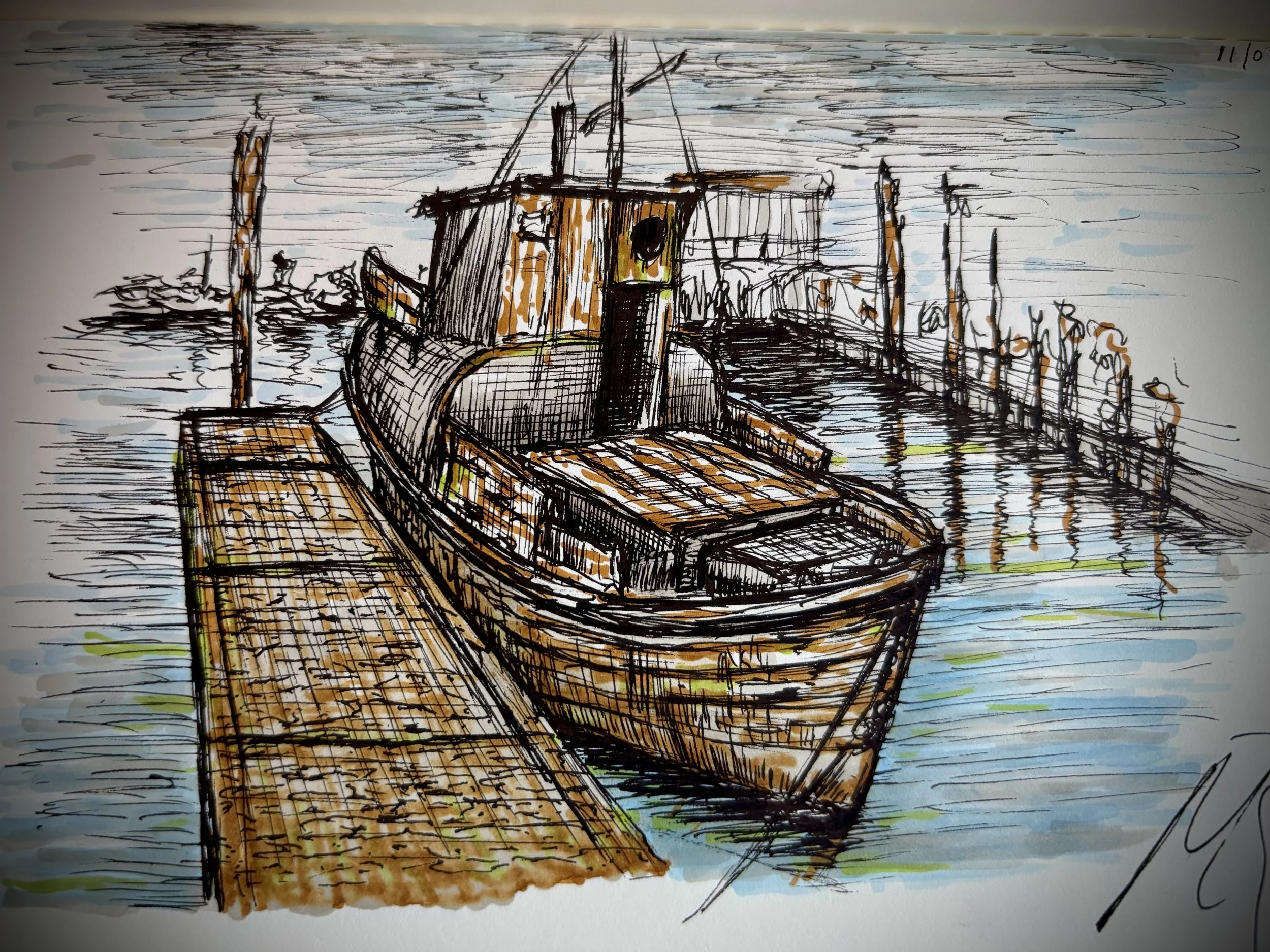
Quick boat sketch in a sketchbook demonstrating observational drawing practice.
The Value of a Sketchbook Practice
One of the biggest misconceptions in drawing is that every piece of artwork needs to become a finished piece.
Many beginners sit down to draw and immediately feel pressure.
The drawing needs to be good.
It needs to be accurate.
It needs to be something worth showing people.
Unfortunately, that pressure often becomes one of the biggest barriers to improvement.
That's where a sketchbook can become incredibly valuable.
A Sketchbook Is For Learning
A sketchbook is not a gallery.
It isn't a portfolio.
It's a place to explore, experiment and learn.
Some sketches might only take five or ten minutes.
Others may be more developed.
The important thing is that the sketchbook becomes somewhere you can draw without worrying about producing a masterpiece every time.
Small Drawings Add Up
Many people believe improvement comes from occasionally creating large finished pieces.
In reality, improvement often comes from hundreds of small observations and decisions made over time.
A quick sketch of a boat.
A tree.
A building.
A coffee cup.
Each drawing teaches something.
The individual sketch may not feel significant, but the lessons accumulate surprisingly quickly.
You Learn To Observe More Carefully
One of the biggest benefits of keeping a sketchbook is that it changes how you look at the world.
You start noticing:
shapes
proportions
shadows
textures
patterns
Subjects that might previously have gone unnoticed suddenly become interesting drawing opportunities.
Over time, observation becomes stronger because you're constantly practising it.
It Removes The Fear Of Mistakes
Many beginner artists struggle because they are trying to avoid mistakes.
Ironically, that often slows progress.
A sketchbook creates permission to experiment.
Not every drawing needs to work.
Not every page needs to be successful.
Sometimes the most useful sketches are the ones that teach you what doesn't work.
Confidence Comes Through Repetition
People often assume confidence arrives before improvement.
Usually it's the other way around.
Confidence grows because you draw regularly.
The more marks you make, the less precious each individual drawing becomes.
You begin trusting your observations and decisions rather than constantly questioning them.
Sketchbooks Help Develop Your Own Style
A lot of artists worry about "finding their style".
In reality, style usually develops naturally through repetition.
The materials you enjoy.
The marks you make.
The subjects you're drawn to.
Over time, patterns begin to emerge.
A sketchbook gives those preferences room to develop without forcing them.
Keep It Simple
One of the best things about sketchbook practice is that it doesn't require a huge commitment.
A few minutes here and there can be enough.
A small sketch completed regularly is often far more valuable than waiting weeks for the perfect opportunity to create something larger.
Consistency nearly always beats intensity.
Enjoy The Process
Perhaps the greatest benefit of a sketchbook is that it encourages enjoyment.
Drawing becomes less about creating perfect finished artwork and more about observing, experimenting and exploring.
That's often where the real learning happens.
And surprisingly often, it's where some of your favourite drawings appear too.
Art Lessons Online and In Person
If you'd like to develop your drawing skills, build confidence or establish a regular sketchbook practice, I offer one-to-one art lessons tailored to your experience and interests.
Whether you enjoy pencil, pen and ink, coloured pencil or watercolour, lessons are designed to help you improve at your own pace while enjoying the process along the way.