The Art of Leaving Things Out
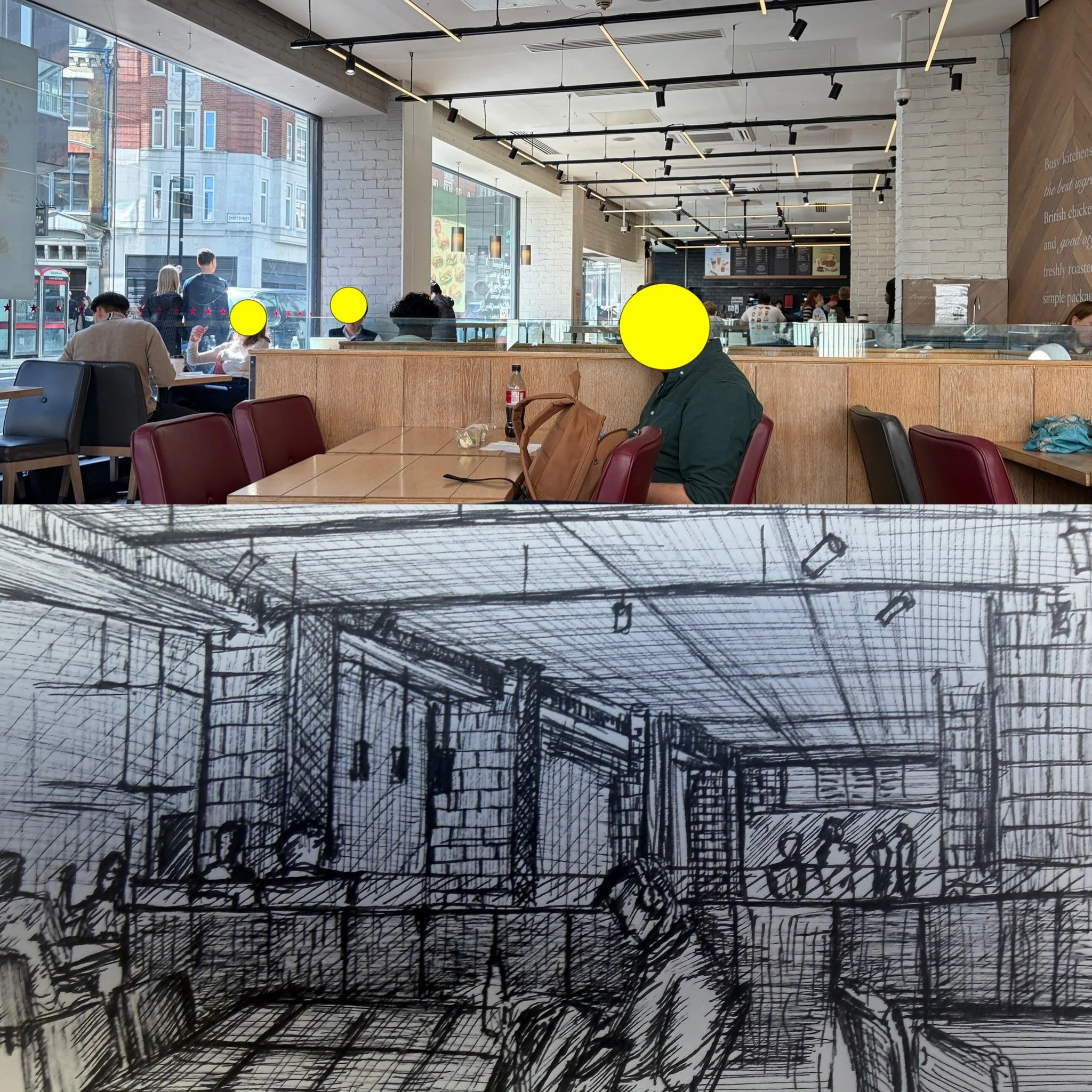
Spontaneous sketch demonstrating ‘rough’ drawing.
Instead of asking yourself:
"What should I draw?"
Try asking:
"What can I leave out?"
It sounds backwards, but one of the most important skills in drawing isn't adding detail.
It's knowing when to stop.
Many beginner artists assume good drawing means capturing everything they see.
Every window.
Every brick.
Every shadow.
Every tiny detail.
The reality is that most successful drawings are built on selection.
The artist chooses what matters and leaves the rest behind.
This sketch was drawn while sitting in a coffee shop. Around me were dozens of details I could have included. People moving, signs, furniture, reflections, cups, menus and background clutter.
If I'd tried to draw everything, the sketch would likely have become confusing and overworked.
Instead, I focused on the elements that felt most important and allowed the rest to remain suggested rather than fully described.
Why beginners often draw too much
Trying to prove they can draw
Fear of missing something
Equating detail with quality
Why simplification matters
Stronger focal points
Better composition
More confidence in mark making
How sketching in public helps
You don't have time to draw every detail
Forces quicker decisions
Encourages observation of shapes rather than objects
What to look for instead
Large shapes
Light and shadow
Structure
Relationships between objects
A practical exercise
Give yourself 10 minutes and only allow:
1 pen
1 page
No erasing
Ask:
"What's essential here?"
Rather than:
"How much can I fit in?"
Art Lessons Online and In Person
If you'd like to develop your drawing skills, build confidence or establish a regular sketchbook practice, I offer one-to-one art lessons tailored to your experience and interests.
Whether you enjoy pencil, pen and ink, coloured pencil or watercolour, lessons are designed to help you improve at your own pace while enjoying the process along the way.