How to Draw Reflective Metal With Pencil
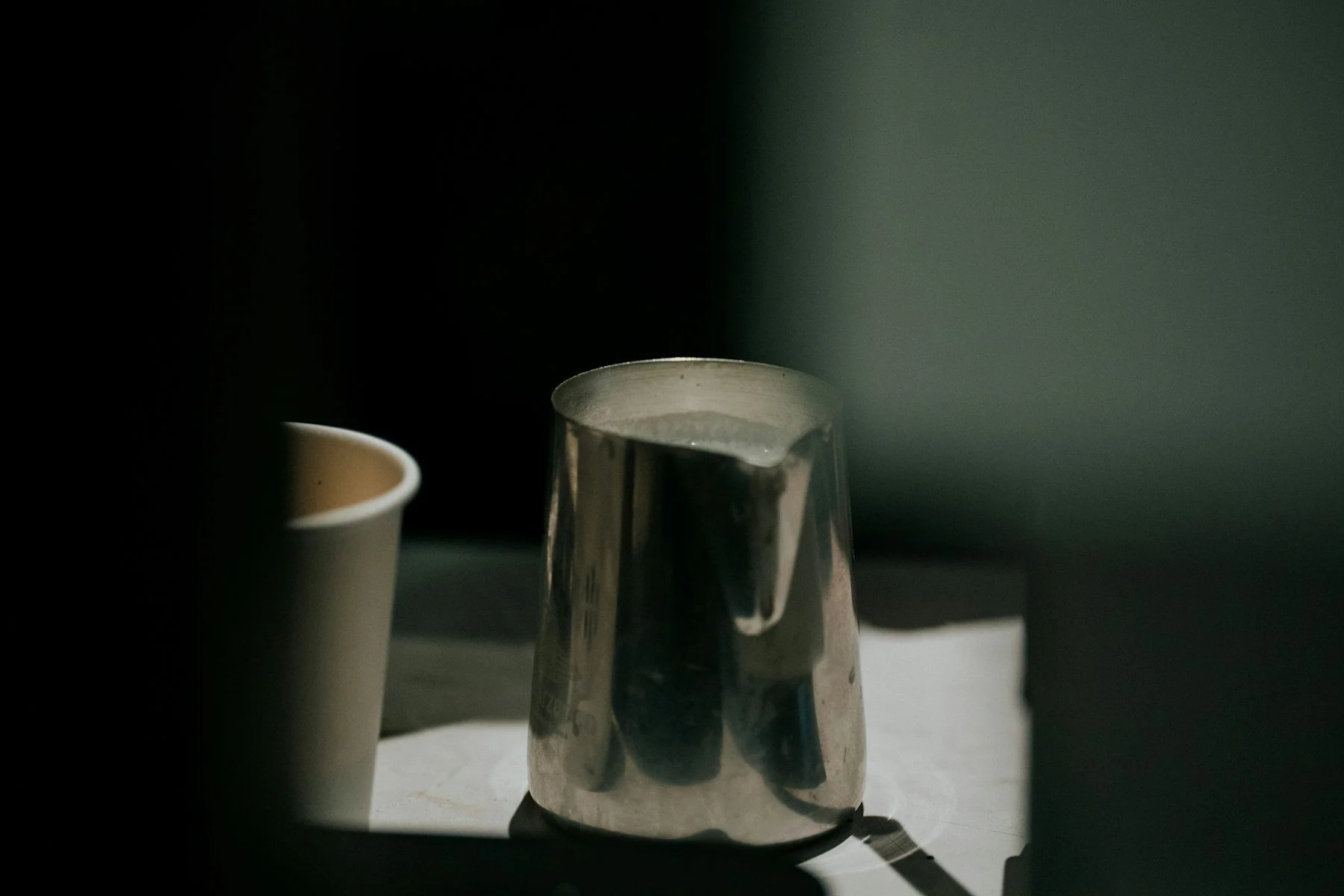
Reflective metal can look intimidating because it seems to contain everything around it. A stainless-steel jug may show a bright window, a dark room, a warped reflection of your hand and a narrow highlight, all on one small surface. If you try to draw every reflection separately, the object quickly becomes confusing.
The useful shift is to stop thinking about drawing ‘silver’. Pencil cannot reproduce the material itself. It can reproduce the pattern of light and dark that makes the surface look reflective. Once that pattern is organised, the eye supplies the metal.
Choose one simple metal object
Begin with a spoon, plain mug, small jug or metal bowl. Avoid engraved decoration and several objects touching one another. A smooth object with a clear silhouette gives you enough challenge without turning the study into a puzzle.
Place it near a window or use one lamp from the side. Include a light object and a dark object nearby so that the reflections have a clear range. Keep the setup still. Metal changes dramatically when either the object or the viewer moves.
Draw the outer shape carefully
Measure the height and width before looking inside the object. Check the main angles and curves. A jug may be symmetrical overall, but its handle, rim and spout change the balance. Lightly mark a centre line if that helps you compare the two sides.
For a cylindrical object, look closely at the ellipses. The top and bottom curves must belong to the same form. Do not draw the rim as a flat line simply because you know it is circular. Draw the shape you can see from your viewing height.
Map the biggest dark and light shapes
Half-close your eyes and ignore small highlights. Find the two or three darkest shapes, the main light area and any strong strip that runs through the object. Draw their boundaries lightly before shading.
These shapes may not follow the object in the way you expect. A dark reflection can cut sharply across a rounded surface. A bright vertical band may narrow, widen or bend. Copy the visible shape rather than trying to make the shading look logically smooth.
Let reflections distort
Curved metal stretches and compresses whatever it reflects. You may recognise the window or your own silhouette, but you do not need to draw a miniature scene. Treat each reflection as an abstract patch with a particular width, value and edge.
Compare where a dark shape begins and ends. Notice whether it touches the rim, disappears around the side or is interrupted by a highlight. These positional relationships are more useful than naming the reflected object.
Use a wider value range
Shiny metal often contains very dark darks beside untouched paper. That sharp contrast creates the impression of gloss. Build the middle values first, then strengthen selected dark areas with a softer pencil such as a 2B or 4B.
Keep the brightest highlights clean. If you shade over them, lift graphite with a kneaded eraser rather than scrubbing the paper. A narrow highlight with a crisp edge can do more to suggest metal than a large area of pale grey.
Vary the edges
Some reflections meet with a hard boundary; others melt gradually into the surface. Look for the sharpest edge in the whole object and keep other edges quieter. If every patch is outlined, the metal can look like camouflage.
The outside edge changes too. A bright side may almost disappear against a light background, while a dark reflected area may create a firm contour. Draw what happens along each section rather than enclosing the whole object in one heavy line.
Check the object from a distance
Stand back or photograph the drawing in black and white. Ask whether the silhouette reads clearly and whether the main dark-light pattern feels connected. Small reflective details cannot rescue a weak overall shape.
If the drawing looks dull, the answer is often greater contrast and more selective edges, not more blending. If it looks fractured, simplify several neighbouring patches into one larger value before adding detail again.
Keep the background involved
The background affects every reflection on the object. A metal jug against a dark wall will carry that darkness into its surface, while a white sheet may produce broad pale bands. Draw enough of the surrounding tone to make the object’s light edge visible and its reflections believable.
You do not need to finish the whole room. A simple rectangle of background tone and a cast shadow can anchor the object. Compare the darkest part of the background with the darkest reflection so the metal does not become detached from the setup.
Avoid polishing the graphite
Heavy blending can give the paper a uniform grey sheen and remove the crisp changes that make metal convincing. Use controlled pencil layers, a clean blending tool only where an edge is genuinely soft, and an eraser to recover narrow light shapes.
Turn the drawing under the light occasionally. If graphite glare makes the values hard to judge, view it from another angle or take a photograph. The final drawing should work because of its value pattern, not because the graphite itself catches the light.
Try a short metal study
Give yourself forty minutes. Spend ten minutes on proportion, ten mapping the main shapes, fifteen building values and five choosing the sharpest highlights and edges. Stop before every tiny mark has been copied.
Reflective metal is a good lesson in trusting observation. It asks you to draw surprising shapes instead of the object you think you know. If you would like calm, structured support with pencil, coloured pencil, ink or watercolour, I offer private art lessons in Teddington, Richmond and South West London, as well as online tuition across the UK.
Ready to take the next step?
If you would like relaxed guidance with watercolour, drawing or coloured pencil, I offer private art lessons for adults in Teddington and South West London, as well as online. We can work at your pace and build a process that makes painting feel enjoyable rather than intimidating.